
Tennis Elbow — When Your Elbow Says “Stop”: What Physiotherapy Really Offers
(And why we don’t need to jump to injections or shockwave first).

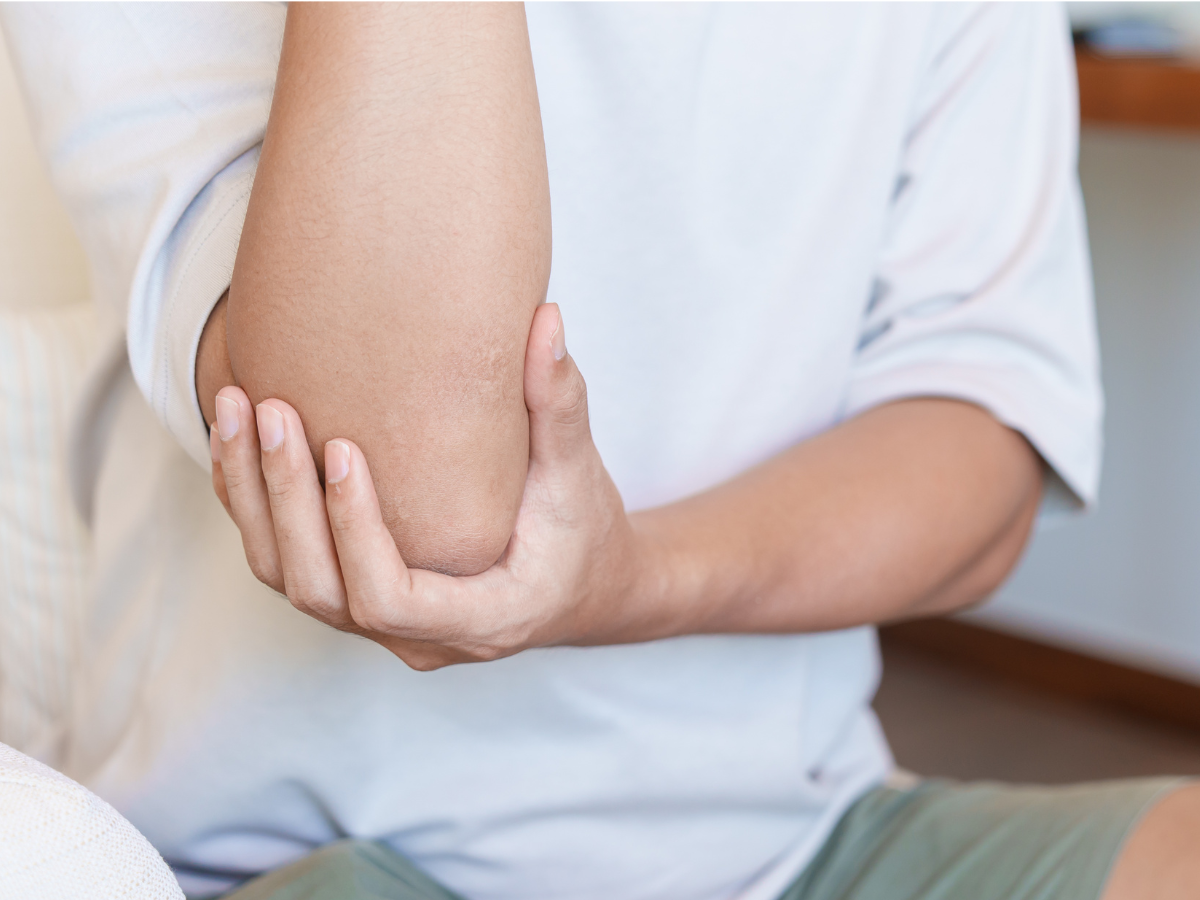
If you’ve ever felt a sharp or nagging pain on the outside of your elbow when lifting a kettle, gripping your Pilates reformer straps, typing at your desk, carrying your baby, or after an intense tennis or padel session — you might have experienced what we commonly call Tennis Elbow.
Its medical name is Lateral Epicondylitis — It’s actually a tendinopathy: a condition where the tendon becomes irritated from overuse, repetition or overload.
And despite the nickname, you don’t need to play tennis to have it.
In fact, most of my patients with this pain have never touched a racket.
Who Is Most Affected?
This condition is most common in people aged 35 to 54 — and it appears frequently in:
Active women lifting weights or practicing padel or tennis
Mothers or fathers carrying newborn, children, heavy bags, troller…
Office workers typing for hours
Intense session of gardening with enthusiasts gripping handles repeatedly to cut the flowers and others
So yes — this is a very real and common issue.
What Does the Research Say?
A recent systematic review published in BioMed Research International analyzed 19 studies to determine which physiotherapy methods work best for Tennis Elbow.
The clear winner?
👉 Manual therapy combined with eccentric strengthening exercises.
These two approaches consistently showed:
- Reduced pain
- Improved mobility
- Faster return to normal function
- Lower recurrence
- Better long-term results compared to passive treatments alone
Other treatments like shockwave therapy, braces, taping or laser can help in some cases, but they are not as effective or cost-efficient as the manual-plus-exercise approach.

Step 1: Manual Therapy — Why It Matters
Pain in the elbow is rarely just an elbow issue. The wrist, shoulder, neck, posture and even breathing patterns can change the load placed on that tendon.
Manual therapy helps by:
Releasing tension in the forearm muscles
Improving blood flow to the tendon
Restoring joint mobility in the elbow and wrist
Correcting compensatory patterns from the shoulder and neck
During a session, I often use:
- Soft tissue work and friction massage
- Gentle joint mobilizations
- Stretching of the forearm extensors
- Fascial release strategies
This not only reduces pain — it prepares the area to tolerate load again.
Step 2: Eccentric Strength Training — The Game Changer
Rest alone does not solve this condition.
Pain may calm down, but the tendon becomes even less resilient, which means symptoms return once you go back to normal activity.
The solution is to retrain and strengthen the tendon, especially during the eccentric phase (the controlled lengthening movement).
A Simple At-Home Eccentric Exercise:
Hold a small dumbbell (0.5–1.5 kg to start)
Use the other hand to lift the wrist into extension
Slowly lower the wrist down (3–5 seconds) using the affected arm
Repeat 10 reps, 3 sets, every days (Stanish protocole)
This method helps:
- Align collagen fibers inside the tendon
- Improve tendon load capacity
- Reduce pain during daily activities
- Prevent future recurrence
It is slow, controlled, and deeply effective.
Step 3 : Beyond the Elbow: Posture, Core & Daily Habits
Why does Tennis Elbow keep coming back?
Because the elbow is rarely the root of the problem.
Common contributing factors include:
- Shoulder instability
- Weak scapular support
- Forward head posture
- Hormonal or collagen-related tissue changes (postpartum + perimenopause especially)
- Stress (yes — stress affects muscle tension and nerve sensitivity)
This is why in my approach, treatment also includes:
- Scapular and core strengthening
- Breathing and postural alignment
- Ergonomics for daily life
- Pilates-based functional movement retraining
When the body works as a system, the elbow stops overworking.
What You Can Do if You Have This Pain
| Action | Why? |
| Start gentle eccentric strengthening | Best evidence for tendon recovery |
| Reduce gripping / heavy lifting temporarily | Prevents aggravation |
| Avoid full rest Rest | makes the tendon weaker |
| Add manual therapy sessions | Improves mobility + reduces pain |
| Adjust posture and workstation | Reduces repeated overload |
| Address stress & sleep | Tendons heal during recovery phases |
And if you’re postpartum or perimenopausal, we can also support collagen synthesis through nutrition (vitamin C, protein, polyphenols, omega-3 — but that’s another blog).
For more details and infor mation you can read more here: BioMed Research International
Final Message
Tennis Elbow is frustrating — but it is very treatable.
The most effective approach is simple: Manual therapy + Progressive Eccentric Strength Training… integrated into whole-body balance and posture.
Not passive rest.
Not quick fixes.
Not “wait and see”.
With the right approach, your elbow doesn’t just recover —it becomes stronger than before.
Ready to move pain-free again? Book your physiotherapy consultation today and start your recovery journey.


